Housing Streamlining in Santee
Faster, Simpler Permitting for Housing Projects Under New State Laws
Each year California (State) passes new laws to address the housing crisis. These laws are aimed at making it easier and faster to build new homes and protect affordable units.
The City of Santee (City) is committed to implementing these laws locally to help property owners, developers, and residents build more housing and support a more affordable future.
On this page, you’ll find:
- Guidance on state housing laws and how they apply in Santee
- Information on Accessory Dwelling Units (ADUs) and Junior ADUs (JADUs)
- SB 9 projects, including two-unit developments and lot splits
- Streamlined permitting, density bonuses, and by-right development options
- Application forms, eligibility criteria, and contact information
The City will continue updating this page as new legislation is adopted and additional resources become available.
Accessory Dwelling Units (ADUs)
In Santee, California
At A Glance
An ADU, is an attached or a detached residential unit accessory to a single-family or multi-family unit. A JADU is a type of ADU with a maximum square footage of 500 square feet.
ADUs must:
- Provide complete, independent living facilities including living, sleeping, eating, cooking, and sanitation.
- Be provided as a permanent housing solution and not as a short-term rental.
JADUs must:
- Be contained entirely within an existing or proposed single-family residence.
- Provide an efficiency kitchen.
- Provide or share a bathroom and sanitation facilities with the primary residence.
Note: The City’s ADU Fee Waiver Program ended on September 27, 2024. ADUs are subject to all fees that are typically collected at permit issuance.
You may be able to add an ADU or JADU to your property. Please review the following resources and exact site requirements to determine whether your qualify
Pursuant to Assembly Bill (AB) 1332 (2023), applicants may apply for a permit using preapproved plans.
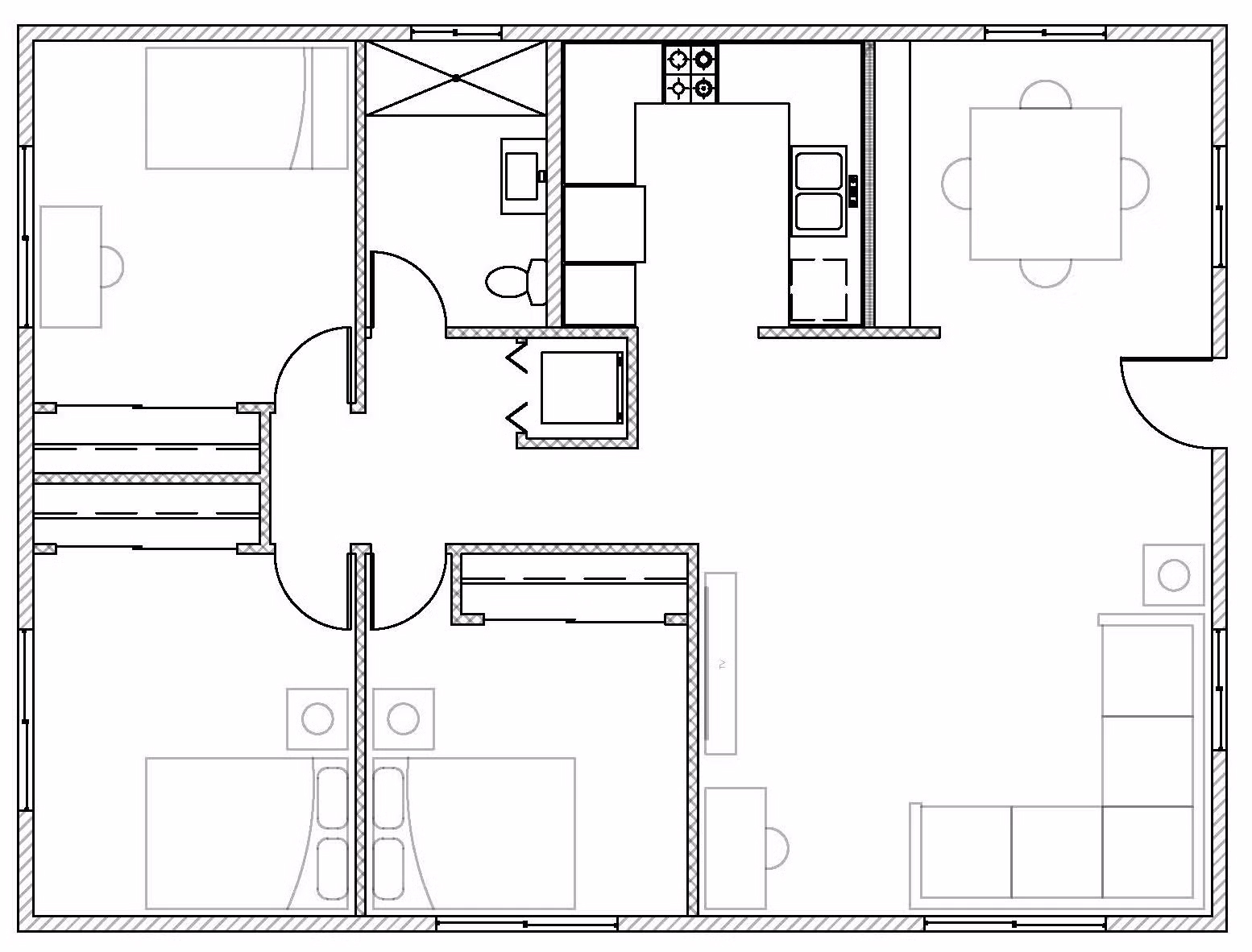
The County of San Diego has developed plans that have been designed and reviewed for compliance with the California Building Code and are provided at no cost to residents. These may be used as guidance as homeowners develop their floor plans and elevations. It will be up to the individual property owner to complete plans based upon their specific site and most recent code updates.
The City accepts the following preapproved plans in compliance with AB 1332:
AB 2533 (2024), streamlines the permitting process for qualified unpermitted ADUs or JADUs built before January 1, 2020, and permits homeowners to obtain a confidential third-party code inspection from a licensed contractor.
Homeowners with unpermitted ADUs may be eligible to receive a building permit, provided certain health, safety, and building standards have been met, as outlined in the Substandard Structure Checklist.
Two Unit Project and Urban Lot Split
In Santee, California
At A Glance
Senate Bill (SB) SB 9 (2021) makes it easier to build more units on land zoned for single-family housing by allowing the creation of up to four units through a Two-unit Project, an Urban Lot Split or both.
- Two-unit Project: Allows up to two residential units, either attached or detached, on a single lot.
- Urban Lot Split: Allows a lot to be split into two lots and up to two residential units on each lot
Please review the City’s SB 9 Guide to learn more about eligibility, standards, development scenarios and approval process for SB 9 projects.
Essential Housing
In Santee, California
At A Glance
The Essential Housing Program was adopted on August 25, 2021 by Ordinance 592 to boost housing production and improve housing affordability. It addresses the current housing crisis by expediting and incentivizing the construction of new housing over a five-year period.
Additional Essential Housing Information
Preliminary Applications
In Santee, California
At A Glance
SB 330 (2019) also referred to as the Housing Crisis Act (HCA), allows for the submittal of a complete preliminary application for certain housing development projects in order to lock in ordinances, policies, and project fees.
Eligible projects include:
- Residential housing projects of two or more units (excluding hotels, assisted living or other commercial dwelling units).
- Mixed-use projects with at least two-thirds of the square footage designated for residential use.
- Transitional, Supportive, or Emergency Housing projects.
- Farmworker housing, as defined in subdivision (h) of Section 50199.7 of the Health and Safety Code.
Density Bonus Program
In Santee, California
At A Glance
Density Bonus is a State law that allows a property owner to increase the site’s established density and have incentives and concessions related to zoning development standards for the development of affordable housing.
Streamlined Housing Development (By-Right)
In Santee, California
At A Glance
The following local and state laws establish options for development proponents to submit eligible housing development applications through a streamlined, ministerial approval process when the proposed development meets all objective code standards.
The City has created a guide to outline the process, eligibility and submittal requirements for the streamlined process.
Applies to all eligible by-right housing projects under Government Code section 65583.2 which meet the definition of "housing development projects" under California Government Code § 65589.5(h)(2).
Eligible residential projects
- Meet the criteria set forth in the Housing Element, including:
- Being proposed on a by-right site as identified in the Housing Element Sites Inventory
- Providing at least 20% affordability to low-income households
- Comply with all applicable objective design, performance, improvement and development standards
Santee Municipal Code (SMC) 13.11
Requires a by-right approval process for relisted housing development sites. Eligible sites that have been relisted are included in the City's 6th Cycle Housing Element Regional Housing Needs Assessment (RHNA) Site Inventory and would qualify under SMC 13.11.
AB 1397
Also referred to as the Starter Home Revitalization Act of 2021, creates a ministerial approval process for the subdivision of certain multi-family lots up to the lot’s density.
AB 803
Builds on SB 35 (2017) creating a ministerial approval process for certain multifamily housing projects. SB 423 projects must include affordable housing and pay prevailing wages.
SB 423
Requires ministerial streamlining for 100% affordable housing developments proposed on lands owed prior to 2024 by a religious or not for profit higher education institution. In residential zones, the density permitted is 30 units per acre. In non-residential zones, the density is 40 units per acre. SB 4 projects must pay prevailing wages.
SB 4
Expanded the eligibility of SB 684 (2023), allowing certain vacant single-family zoned lots and multi-family zoned lots to subdivide and build up to 10 housing units.
SB 1123
Amends both AB 2011 (2022) and SB 6 (2022), allowing additional residential developments in commercial zones and further limiting local discretion.
- AB 2011 also referred to as the Affordable Housing and High Road Jobs Act of 2022, allows 100% affordable housing developments by-right in commercial zones where retail, office, or parking are the principal permitted use. The allowed density is site dependent but start at 30 dwelling units per acre.
- SB 6, also referred to as the Middle Class Housing Act of 2022, allows housing in zones where retail, office, or parking are permitted uses. SB 6 projects must follow existing approval processes and may be permitted for densities up to 30 dwelling units per acre.
AB 2243
CEQA Streamlining
In Santee, California
At A Glance
The California Environmental Quality Act (CEQA), established statewide regulations for the environmental review of discretionary projects and a process for mitigating or avoiding potential environmental impacts. Documents and reports that result from the CEQA review process seek to inform the public, applicable local agencies, and decision makers about the potential environmental impacts associated with certain planning approvals.
The following sections outline different streamlining opportunities for housing development projects when it comes to CEQA review.
CEQA Guidelines Section 15183 allows a streamlined environmental review process for projects consistent with the densities established by existing zoning, community plan or general plan policies for which an EIR was certified.
The City certified a Master EIR for the General Plan Update (SCH No. 2002071113) on June 6, 2003. Projects that are consistent with the densities and use characteristics considered by the Master EIR may qualify for the 15183-exemption process.
This is a categorical exemption for infill development within urbanized areas if the when the development meets certain criteria.
The infill project must be consistent with the General Plan and Zoning requirements and may not result in any significant traffic, noise, air quality, or water quality impacts.
A new statutory exemption for certain housing developments with densities of 15 dwelling units per acre or more.
AB 130
Also referred to as “near miss” this law is to minimize CEQA analysis when a housing development project fail to qualify for any CEQA exemption due to a single condition. In this instance, CEQA review is limited to those environmental effects caused solely by that single condition.
SB 131